
Aged Care Dental
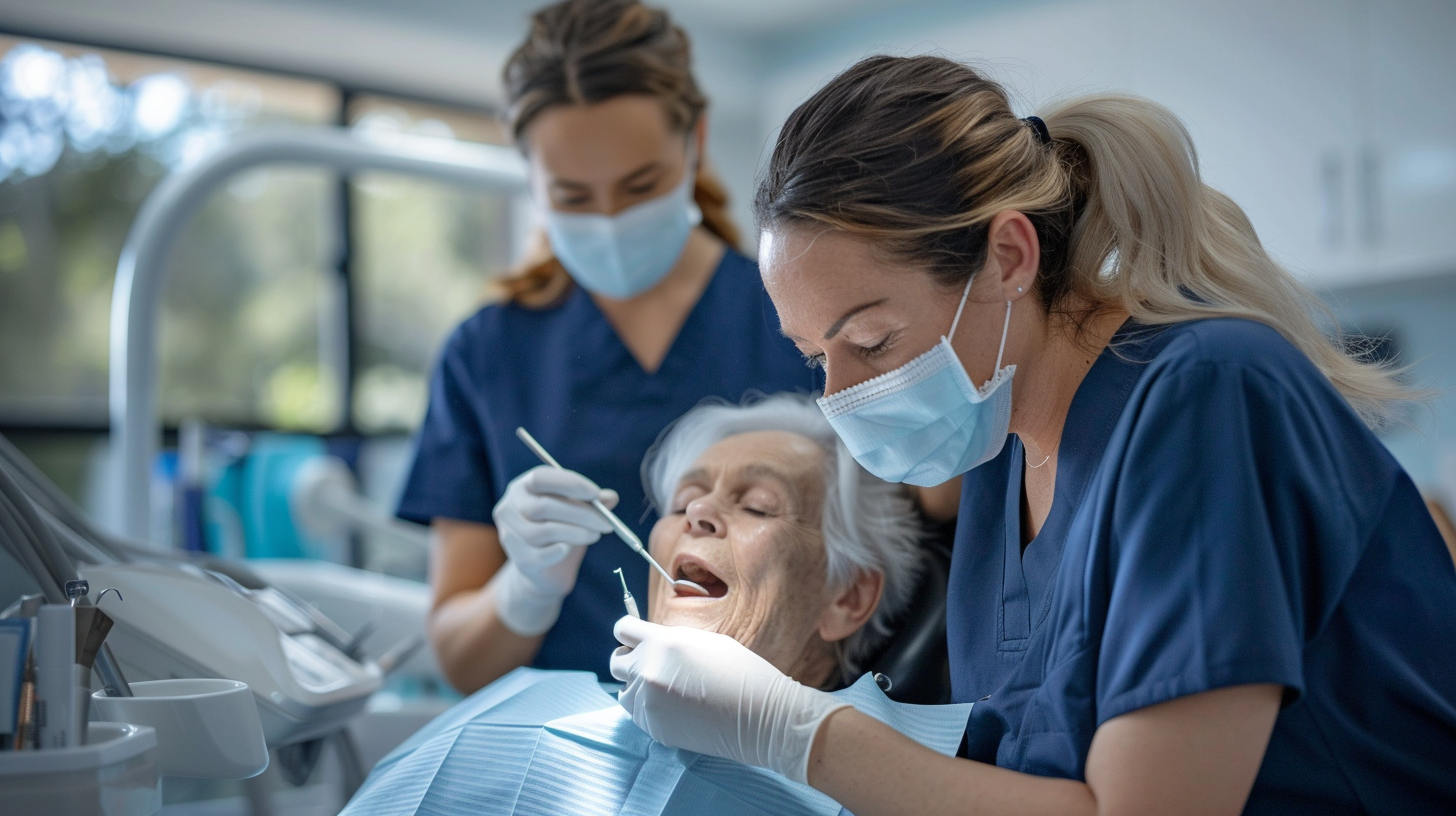
Denture & Oral Care for Seniors: Why Regular Check-Ups Matter More Than You Think
As we age, oral health becomes about far more than maintaining a smile. It plays an important role in nutrition, communication, comfort, and overall wellbeing.
Despite this, many older adults still assume that sore gums, difficulty chewing, or loose dentures are simply part of ageing. In reality, these issues are often preventable and manageable with appropriate care and regular review.
The Link Between Oral Health and Overall Wellbeing
Oral health is closely connected to general health, particularly in older adults.
Difficulties with chewing and swallowing, often caused by poorly fitting dentures or oral disease, can reduce food intake and lead to inadequate nutrition. This is especially concerning in ageing populations, where maintaining adequate protein and micronutrient intake is essential for overall health. Poor oral health has been associated with reduced quality of life, increased frailty, and higher risk of systemic conditions (Oishi et al.,2021; Murali et al., 2025).
Oral function also affects communication and social engagement. Problems with speech or discomfort while eating may lead to reduced confidence and participation in social activities.
Importantly, oral health is increasingly recognised as part of broader health management. Conditions such as oral infections can contribute to systemic complications, particularly in vulnerable individuals, including those at risk of aspiration pneumonia (Oishi et al., 2021).
Maintaining good oral health is therefore a key part of healthy ageing.
Why Dentures Still Require Regular Check-Ups
A common belief is that once dentures are fitted, ongoing dental care is no longer required. However, dentures require routine review just like natural teeth.
Changes in the mouth occur over time. Bone resorption, soft tissue changes, and general ageing processes can alter the fit and function of dentures. Without regular monitoring, these changes may lead to discomfort, instability, and difficulty eating.
Poor denture hygiene and ill-fitting appliances are associated with several oral health conditions. Denture stomatitis, an inflammatory condition affecting a large proportion of denture wearers, is commonly linked to microbial accumulation on dentures. Fungal and bacterial biofilms can develop if dentures are not cleaned effectively (Ganavadiya etal., 2014; Murali et al., 2025).
There is also evidence linking poor oral hygiene in older adults with broader health risks, including respiratory infections. In populations with complex medical needs, maintaining oral hygiene is an important part of preventing avoidable complications (Oishi et al., 2021).
Many of these conditions develop gradually and may not cause immediate discomfort. Regular dental assessments are therefore essential for identifying early changes and preventing progression.
The Hidden Challenges Seniors Face
Maintaining effective denture care is not always straightforward.
Older adults may experience reduced hand strength or dexterity, particularly in conditions such as arthritis. Visual impairment, cognitive decline, and reduced mobility can further complicate daily oral hygiene routines.
Research shows that even when individuals understand the importance of denture care, consistent and effective cleaning may still be difficult to achieve (Rani et al., 2024). These challenges increase the risk of plaque accumulation, infection, and poorly maintained dentures.
Without adequate support and regular professional input,oral health can decline quickly in this population.
What a Professional Denture Review Involves
Regular denture reviews are designed to identify issuesearly and maintain comfort, function, and oral health.
A comprehensive review typically includes:
1. Full Oral Examination
Assessment of the oral tissues helps identify inflammation, sores, infections, or changes in the mouth. Early detection is particularly important in older adults, where conditions may progress without obvious symptoms.
2. Denture Assessment
Dentures are evaluated for fit, stability, and wear. Clinicians assess whether adjustments, relining, or replacement are required. Bite alignment and aesthetic concerns are also considered.
3. Hygiene and Care Review
Daily cleaning routines are reviewed and adapted where needed. This may include practical recommendations for improving hygiene or selecting appropriate tools for individuals with limited dexterity.
Regular reviews help prevent minor issues from developing into more complex problems and support long-term oral health.
Supporting Care Staff Makes a Real Difference
Many older adults rely on caregivers, family members, oraged-care staff for assistance with oral hygiene.
Strong evidence shows that caregiver involvement is critical to improving outcomes. Studies, including randomised controlled trials, have demonstrated that training caregivers in oral health practices significantly improves plaque control, reduces inflammation, and enhances overall oral hygiene in nursing home residents (Hartshorn et al., 2021; Weintraub et al.,2018).
Caregiver education supports more consistent and effective daily routines, particularly in individuals with cognitive or physical limitations.
Collaboration between dental professionals and care teams allows for:
- Better hygiene practices
- Earlier identification of problems
- More consistent care delivery
- Reduced risk of infection and discomfort
This team-based approach is especially important in residential aged-care settings.
The Role of Proper Denture Care Products
Using appropriate denture care products can make daily hygiene more manageable and effective.
Specialist cleaning solutions, brushes, and supportive tools can improve cleaning efficiency and reduce harmful microbial build-up. For individuals with sensitive tissues or limited dexterity, selecting the right products can also improve comfort and adherence to care routines.
Professional guidance helps ensure that products and techniques are matched to the individual’s needs.
How Often Should Dentures Be Checked?
Clinical guidance generally recommends dental assessments every 6 to 12 months, even when there is no pain or obvious issue.
Regular visits allow for:
- Professional denture review
- Monitoring of oral health
- Preventive care and advice
- Early intervention where needed
Preventive care is consistently shown to be more effective and less complex than treating advanced oral disease, particularly in older populations with additional health risks (Murali et al., 2025).
Don’t Wait for Discomfort
Denture-related problems often develop gradually and may not be immediately noticeable.
Small changes in fit or minor irritation can progress into more serious issues, including painful sores, infections, and difficulty eating. These problems can have a direct impact on nutrition, health, and quality of life.
Regular check-ups allow for early identification and management, helping maintain comfort and function over time.
Take the Next Step
For individuals who wear dentures, proactive care isessential.
Regular dental assessments, combined with consistent daily hygiene and appropriate support, can make a meaningful difference. This not only helps maintain oral health but also supports overall wellbeing, independence, and quality of life.
References
Ganavadiya, R., Chandrashekar, B. R., Goel, P., Hongal, S.G., & Jain, M. (2014). Mobile and portable dental services catering to the basic oral health needs of the underserved population. Annals of Medical and Health Sciences Research, 4(3), 293–304.
Hartshorn, J. E., Cowen, H. J., & Comnick, C. L. (2021).Cluster randomized control trial of nursing home residents’ oral hygienefollowing an educational program for caregivers. Special Care in Dentistry,41(3), 372–380.
Murali, A., Muddappa, S. C., Rajan, R. R., Joseph, A., &Ravi, A. B. (2025). Barriers to geriatric oral health: A multifaceted publichealth issue. Cureus, 17(8), e89604.
Oishi, M. M., Childs, C. A., Gluch, J. I., & Marchini,L. (2021). Delivery and financing of oral health care in long-term services andsupports: A scoping review. Journal of the American Dental Association, 152(3),215–223.
Rani, H., Mohd-Dom, T. N., Meei, T. I., Rosli, M. S. A.,Quan, L. Z., Aziz, A. F. A., & Aun, N. S. M. (2024). Investigating thechallenges and opportunities of domiciliary oral care for older adults. Healthcare,12(23), 2469.
Weintraub, J. A., Zimmerman, S., Ward, K., Wretman, C. J.,Sloane, P. D., Stearns, S. C., Poole, P., & Preisser, J. S. (2018).Improving nursing home residents’ oral hygiene: Results of a cluster randomizedintervention trial. Journal of the American Medical Directors Association.