Addressing Barriers to Access in Everyday Life
Accessing dental care is not always as simple as booking an appointment and attending a clinic. For many individuals, particularly those living with complex health or social needs, there are significant barriers that make traditional dental visits difficult or, in some cases, not feasible.
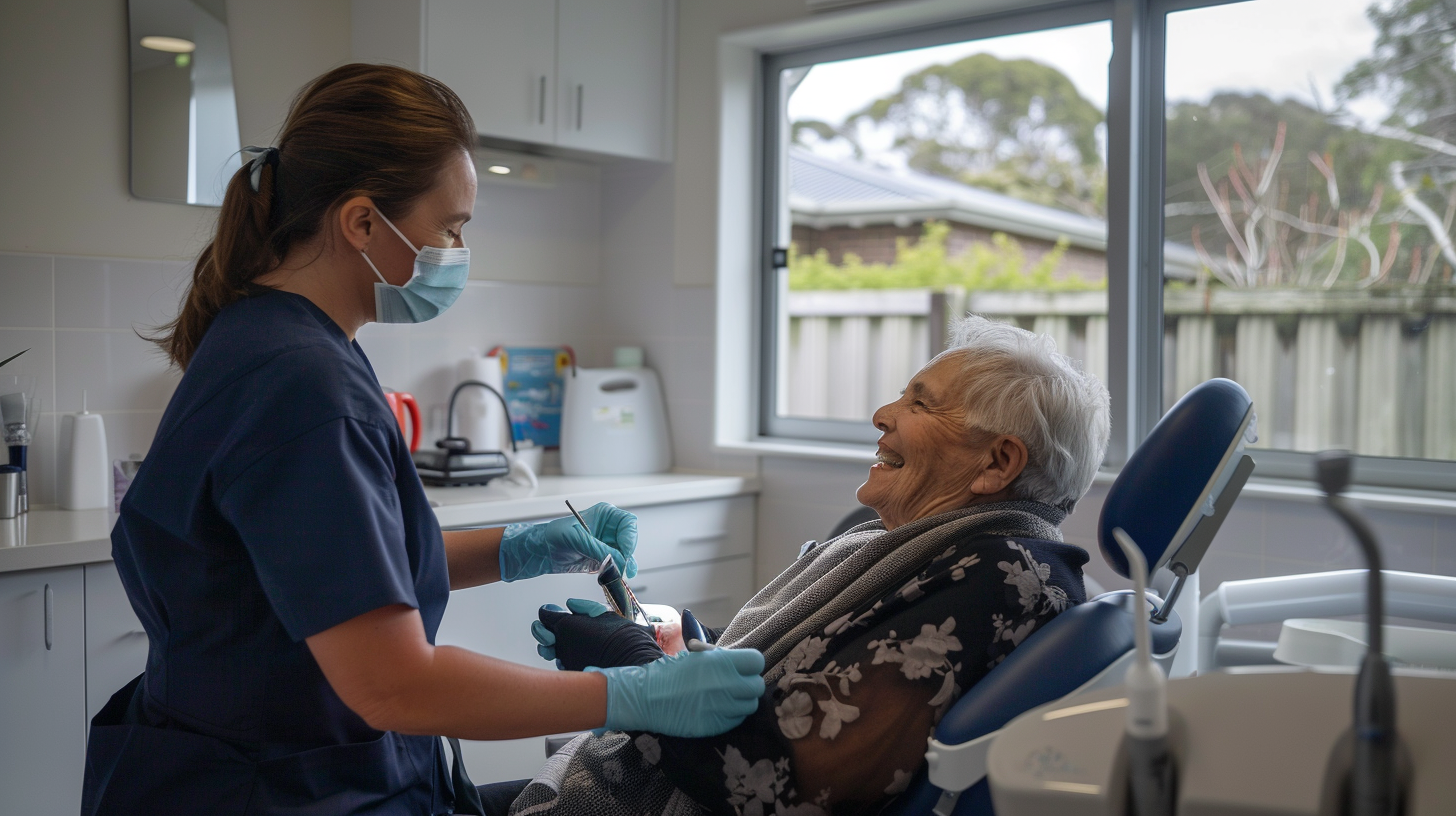
In-home dental services offer an alternative by bringing care directly to the individual in their own environment. This approach is increasingly recognised as an effective way to support populations who experience challenges accessing fixed-site healthcare.
Understanding Who Benefits from In-Home Dental Care
In-home dental services are particularly valuable for individuals who experience limitations related to health, mobility, or social circumstances.
This includes older adults with reduced mobility or physical frailty, individuals living with chronic or complex medical conditions, and those recovering from illness or injury. For these groups, travelling to a clinic can be physically demanding or medically inappropriate.
People living with cognitive conditions such as dementia may also benefit significantly from in-home care. Familiar environments can reduce confusion and distress, improving their ability to engage with treatment. Similarly, individuals living with disability or those who rely on caregivers may face transport and accessibility challenges that limit their ability to attend traditional appointments.
Research consistently shows that access to dental care is shaped by overlapping health, social, and environmental factors, and that these barriers tend to accumulate in individuals with more complex needs (Murali etal., 2025; Oishi et al., 2021). Flexible care delivery models, including in-home services, are therefore critical in addressing these access gaps.
Why Removing Barriers Matters
When access to routine dental care is limited, individuals are more likely to delay or avoid treatment. Over time, this can lead to the progression of oral diseases such as dental caries, periodontal disease, and oral infections.
These conditions are not only painful but can also affect a person’s ability to eat, speak, and maintain adequate nutrition. For older adults in particular, this can contribute to reduced quality of life and pooreroverall health outcomes.
There is also a broader health impact. Evidence shows that poor oral health in vulnerable populations is associated with system ccomplications, including increased risk of infection and hospitalisation (Oishiet al., 2021). Addressing access barriers is therefore essential not only fororal health, but for general wellbeing.
The Clinical and Practical Benefits of In-Home Care
Delivering dental care in a home setting offers several important advantages.
Reduced Physical and Logistical Burden
Patients are not required to travel, arrange transport, or navigate clinical environments. This is particularly beneficial for individuals with limited mobility, chronic illness, or reliance on others for support.
Greater Comfort and Familiarity
Receiving care in a familiar environment can reduce anxiety and improve cooperation. This is especially important for individuals with cognitive impairment or those who find clinical settings overwhelming (Rani etal., 2024).
Improved Continuity of Care
In-home services support regular monitoring and follow-up. This enables early detection of oral health issues and reduces the likelihood of conditions progressing without intervention.
Inclusion of Caregivers and Support Networks
Caregivers and family members can be involved directly during appointments. This allows for better communication, hands-on education, and practical support for maintaining daily oral hygiene routines.
Strong evidence shows that caregiver involvement improves oral health outcomes, particularly when supported through structured education and collaboration with dental professionals (Hartshorn et al., 2021; Weintraubet al., 2018).
Supporting Preventative and Early Intervention Care
In-home dental services support a preventive approach to care.
By making regular check-ups more accessible, individuals are more likely to receive early intervention for developing issues. This can reduce the need for more complex or emergency treatment in the future.
Mobile and portable dental care models have been shown to increase service utilisation and deliver essential preventive care to underserved populations (Vashishtha et al., 2014; Gupta et al., 2019). These approaches help shift the focus from reactive treatment to proactive health management.
A More Inclusive Model of Healthcare
In-home dental services reflect a broader shift toward more inclusive and adaptable healthcare delivery.
Traditional models of care often assume that patients are able to attend clinical settings. However, this is not always realistic for individuals with complex needs. By adapting services to the individual rather than the other way around, in-home care helps address inequities in access.
This person-centred approach recognises that accessibility, comfort, and dignity are fundamental to effective care. It also aligns with emerging models of integrated healthcare, which emphasize collaboration between clinicians, caregivers, and support networks to improve outcomes (Shivakumar etal., 2026).
Final Thought
For individuals who face barriers to accessing traditional dental services, in-home care is not simply an alternative. In many cases, it is the most appropriate and effective way to deliver care.
By removing barriers and providing services in familiar environments, in-home dentistry supports better access, earlier intervention, and improved health outcomes. It represents a practical step toward a more equitable and responsive healthcare system.
References (APA 7th Edition)
Gupta, S., Hakim, M., Patel, D., Stow, L. C., Shin, K.,Timothé, P., & Nalliah, R. P. (2019). Reaching vulnerable populations through portable and mobile dentistry. Dentistry Journal, 7(3), 75.
Hartshorn, J. E., Cowen, H. J., & Comnick, C. L. (2021).Cluster randomized control trial of nursing home residents’ oral hygiene following an educational program for caregivers. Special Care in Dentistry,41(3), 372–380.
Murali, A., Muddappa, S. C., Rajan, R. R., Joseph, A., &Ravi, A. B. (2025). Barriers to geriatric oral health: A multifaceted public health issue. Cureus, 17(8), e89604.
Oishi, M. M., Childs, C. A., Gluch, J. I., & Marchini,L. (2021). Delivery and financing of oral health care in long-term services and supports: A scoping review. Journal of the American Dental Association, 152(3),215–223.
Rani, H., Mohd-Dom, T. N., Meei, T. I., Rosli, M. S. A.,Quan, L. Z., Aziz, A. F. A., & Aun, N. S. M. (2024). Investigating the challenges and opportunities of domiciliary oral care for older adults. Healthcare,12(23), 2469.
Shivakumar, A. T., Srinivas, S., Kalgeri, S. H., Kishor, M.M., & Avarebeel, S. S. (2026). A transformative interprofessional model for geriatric oral health care. Frontiers in Dental Medicine, 7.
Vashishtha, V., Kote, S., Basavaraj, P., Singla, A., &Pandita, V. (2014). Reach the unreached: A systematic review on mobile dental units. Journal of Clinical and Diagnostic Research, 8(8), ZE05–ZE08.
Weintraub, J. A., Zimmerman, S., Ward, K., Wretman, C. J.,Sloane, P. D., Stearns, S. C., Poole, P., & Preisser, J. S. (2018).Improving nursing home residents’ oral hygiene: Results of a cluster randomized intervention trial. Journal of the American Medical Directors Association.