Aged Care mobile dental service
Oral Health in Aged Care: Why It Matters
An Essential but Often Overlooked Area
Oral health is a key component of overall health andwellbeing in older adults, yet it is frequently under-prioritised in aged-caresettings.
As populations age and the number of people requiring long-term care increases, the importance of integrating oral health into routine care has become more widely recognised. Despite this, it often remains overlooked in comparison to other health priorities.
The Health Implications of Poor Oral Care
Poor oral health in older adults is associated with a rangeof significant health outcomes.
Difficulties with chewing and swallowing, often linked to dental disease or poorly maintained dentures, can reduce food intake and lead to malnutrition. This is particularly concerning in aged-care populations, where nutritional status plays a key role in maintaining strength, immunity, and recovery from illness (Oishi et al., 2021).
Oral health is also connected to systemic health. Infections originating in the mouth can contribute to broader complications, including respiratory infections such as aspiration pneumonia, especially in medically vulnerable individuals. Poor oral hygiene can increase bacterial load in the oral cavity, which may be aspirated into the lungs (Oishi et al., 2021; Muraliet al., 2025).
Beyond physical health, oral conditions can cause ongoingpain and discomfort, affecting communication, social interaction, and qualityof life. In older adults, these impacts are often underreported but cansignificantly influence overall wellbeing.
Barriers Within Aged-Care Settings
Residents in aged-care facilities often face multiple and overlapping barriers to maintaining good oral health.
Mobility limitations can make it difficult to attend off-site dental appointments, while transportation and coordination requirements create additional challenges. For many residents, attending a dental clinic may not be feasible without significant support.
Dependence on caregivers for daily oral hygiene is another important factor. Many residents require assistance with brushing, denture care, and monitoring for oral health changes. However, caregivers may have limited training or time, which can affect consistency and effectiveness of care (Rani et al., 2024).
There is also evidence that oral health may be deprioritised within aged-care environments due to competing clinical demands and limited integration with broader healthcare services (Murali et al., 2025). As a result, oral health issues may go unnoticed until they become more advanced.
The Role of Mobile Dental Services
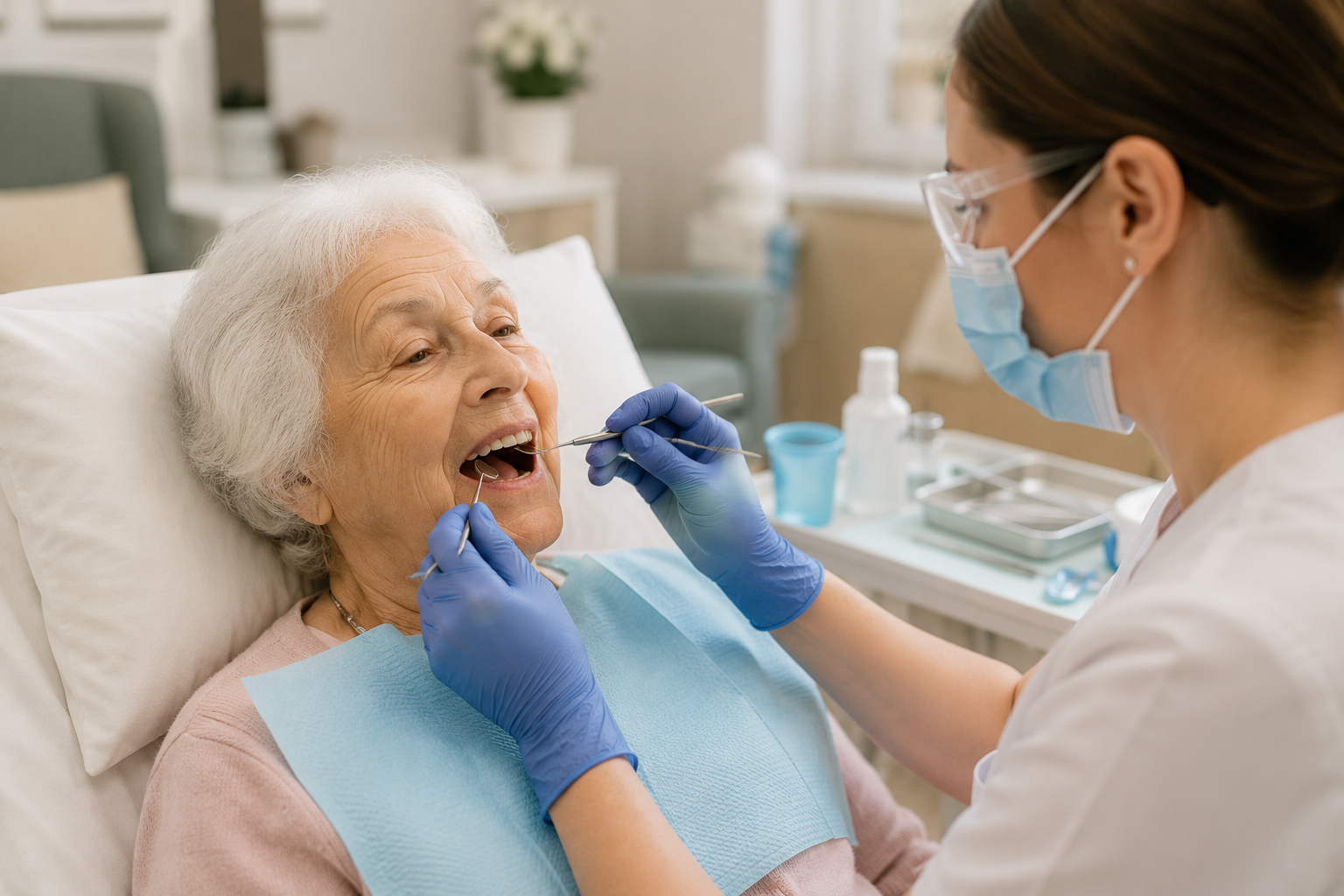
Mobile dentistry offers a practical and effective approachto addressing many of these challenges.
By delivering care directly within aged-care facilities, mobile services remove the need for residents to travel and reduce reliance on external appointments. This makes it easier to provide regular oral health assessments and ongoing preventive care.
Mobile dental programs also support early identification ofissues, allowing clinicians to detect changes in oral health before theyprogress into more serious conditions. This is particularly important inpopulations where symptoms may not be clearly communicated.
In addition, these services enable closer collaboration between dental professionals and care staff. On-site care creates opportunities for education, guidance, and shared responsibility, helping to improve daily oral hygiene practices.
Evidence shows that mobile and portable dental care models can improve access and increase utilisation of services among older and vulnerable populations, particularly in settings where traditional care pathways are limited (Vashishtha et al., 2014; Gupta et al., 2019).
Improving Outcomes Through Integration
Improving oral health outcomes in aged-care setting requires more than occasional treatment. It requires integration of oral health into everyday care.
A collaborative approach that includes dental professionals, caregivers, and broader healthcare teams can support more consistent and effective care delivery. This includes routine assessment, preventive strategies, and caregiver education.
Interprofessional models of care highlight the importance ofembedding oral health within overall health management, rather than treating itas a separate or optional service (Shivakumar et al., 2026).
When oral health is incorporated into routine care, residents benefit not only from improved oral conditions but also from better nutrition, increased comfort, and enhanced quality of life.
References
Gupta, S., Hakim, M., Patel, D., Stow, L. C., Shin, K.,Timothé, P., & Nalliah, R. P. (2019). Reaching vulnerable populations through portable and mobile dentistry. Dentistry Journal, 7(3), 75.
Murali, A.,Muddappa, S. C., Rajan, R. R., Joseph, A., & Ravi, A. B. (2025). Barriersto geriatric oral health: A multifaceted public health issue. Cureus, 17(8),e89604.
Oishi, M. M., Childs, C. A., Gluch, J. I., & Marchini,L. (2021). Delivery and financing of oral health care in long-term services and supports: A scoping review. Journal of the American Dental Association, 152(3),215–223.
Rani, H., Mohd-Dom, T. N., Meei, T. I., Rosli, M. S. A.,Quan, L. Z., Aziz, A. F. A., & Aun, N. S. M. (2024). Investigating the challenges and opportunities of domiciliary oral care for older adults. Healthcare, 12(23), 2469.
Shivakumar, A.T., Srinivas, S., Kalgeri, S. H., Kishor, M. M., & Avarebeel, S. S. (2026).A transformative interprofessional model for geriatric oral health care.Frontiers in Dental Medicine, 7.
Vashishtha, V.,Kote, S., Basavaraj, P., Singla, A., & Pandita, V. (2014). Reach theunreached: A systematic review on mobile dental units. Journal of Clinicaland Diagnostic Research, 8(8), ZE05–ZE08.